If you’ve ever tried to make an outdoor space comfortable, you’ve probably found yourself stuck between choosing awnings and canopies.
At first glance, awnings and canopies sound the same. They both provide shade and protect you from the sun. However, in reality, awnings and canopies have very different purposes.
After years of working with both residential and commercial clients, we’ve learned that people are happiest when their choice fits their daily habits.
So, today, we break down awnings vs. canopies to help you decide the best fit for you!
What Are Awnings?
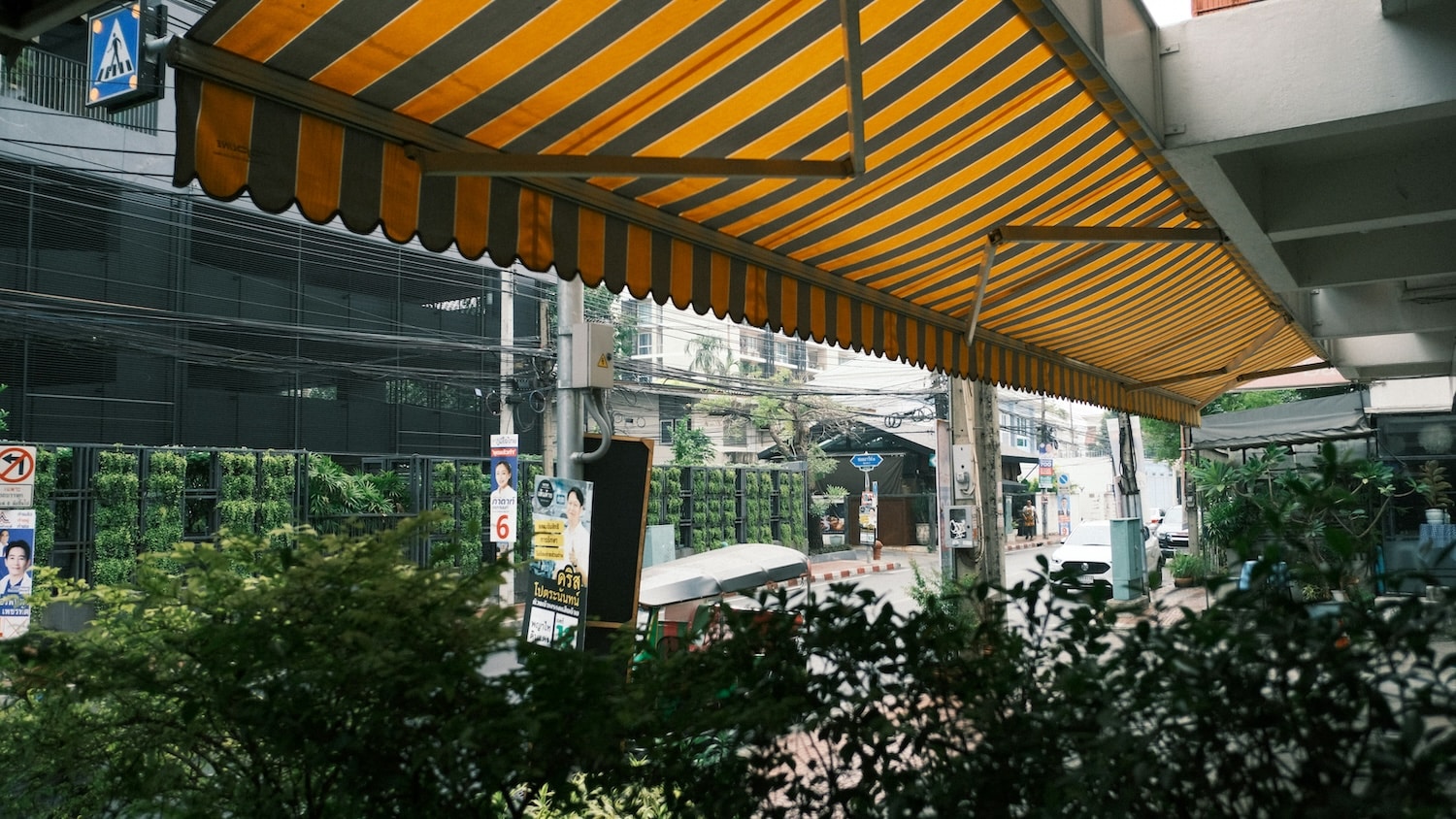
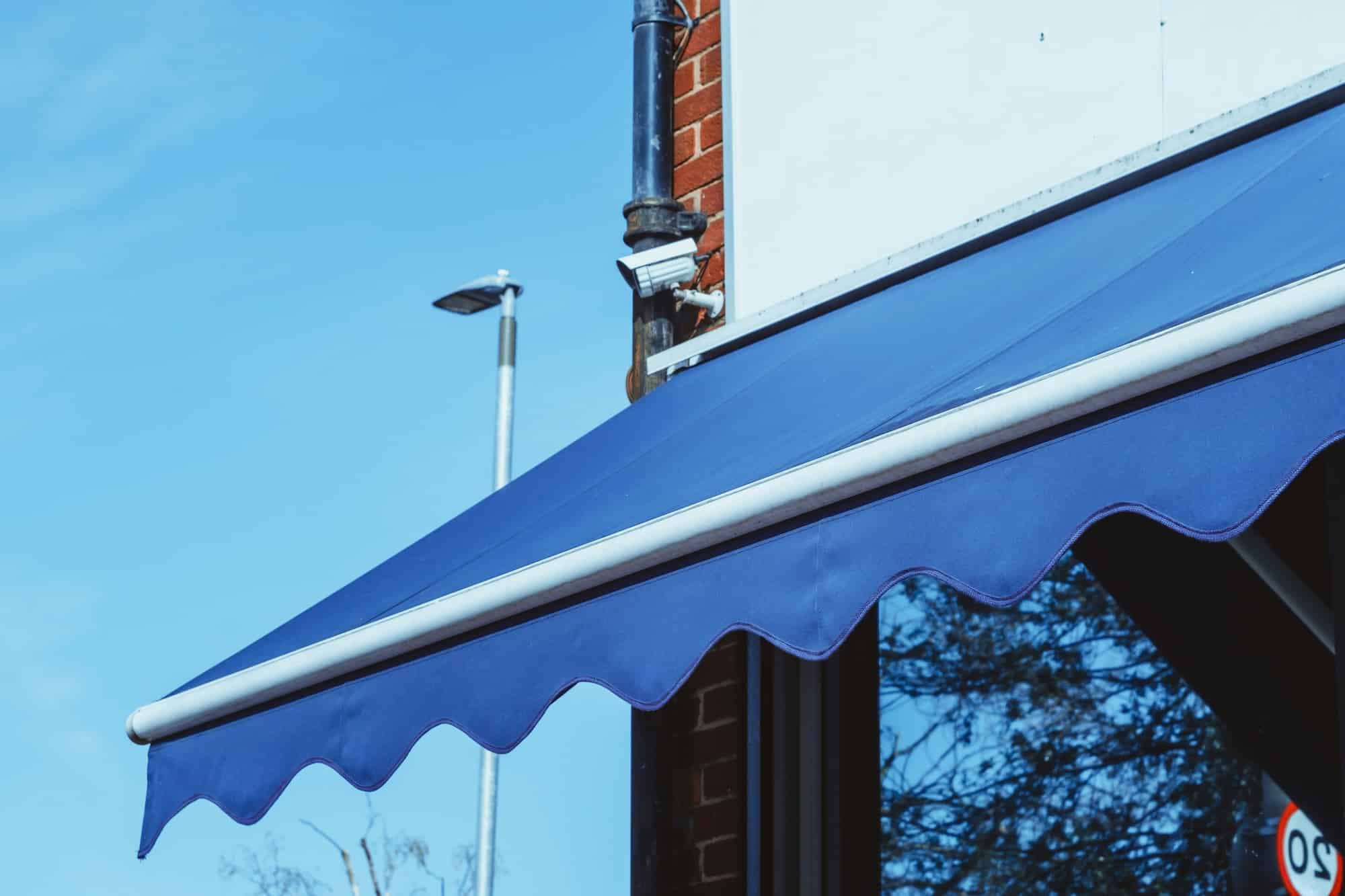
Awnings are coverings made of canvas, fabric, or metal, usually attached to a building’s outside wall. Awnings are connected to windows, patios, doors, and storefronts, protecting from the sun, rain, and snow.
There are two components of awnings. A frame provides support, while the fabric or metal panels withstand the weather.
You may not realize it, but awnings do more than cast a shade. They can keep indoor spaces cooler and reduce glare. For commercial businesses, awnings can attract attention and create a more welcoming frontage!
Types Of Awnings
There are many types of awnings to choose from. Each one has its advantages and disadvantages.
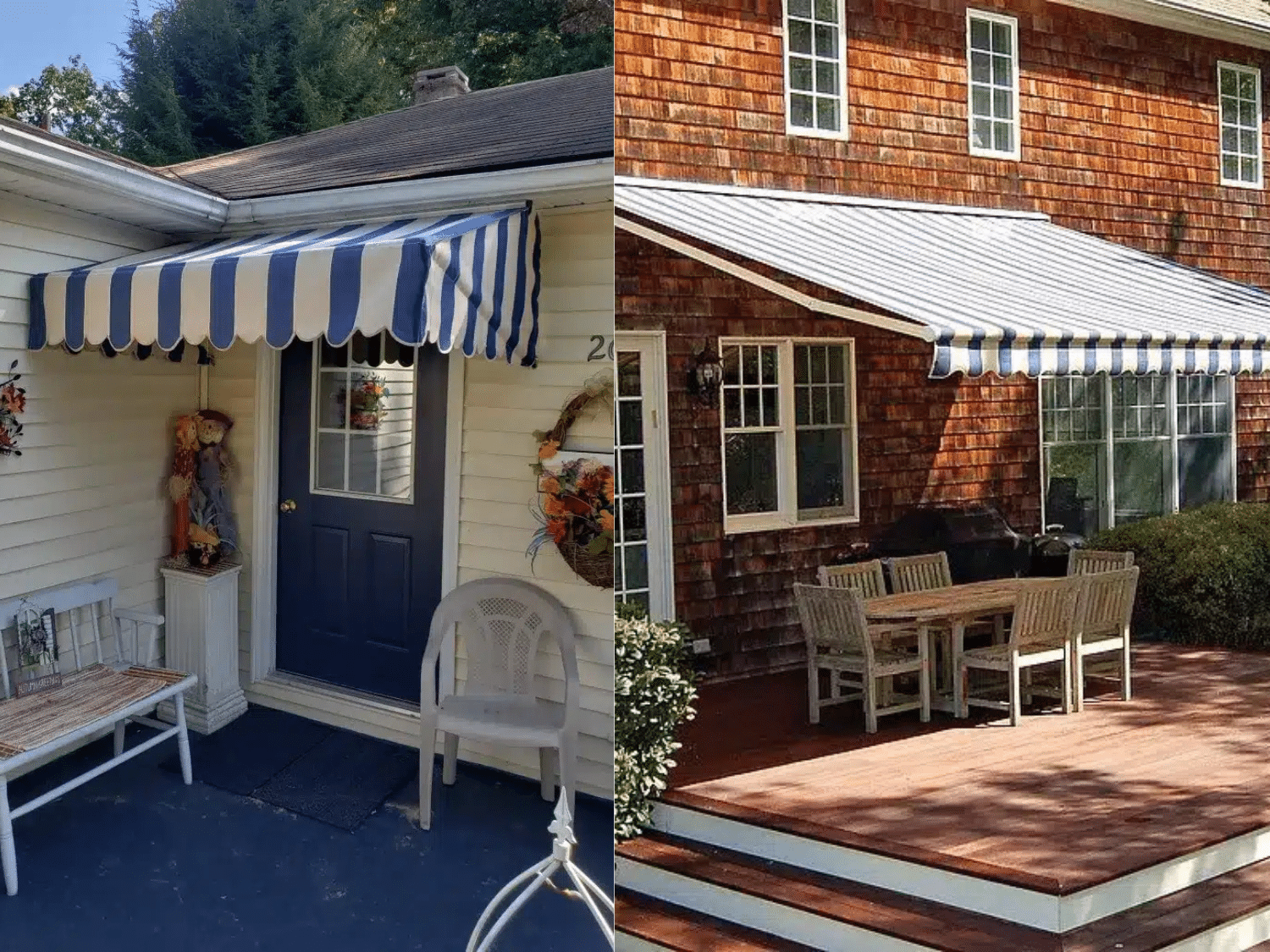
- Retractable Awnings: Retractable awnings can be rolled away when the weather is good. They can be manual or motorized with remote controls or sensors.
- Fixed Awnings: Fixed awnings are permanently attached to the building and are the most durable option. These awnings are usually used for commercial businesses.
- Pergola Awnings: Pergola awnings combine the permanent framework of a pergola with the adjustable fabric of an awning.
Aside from these, awnings can also be classified according to material and shape. Metal awnings are the most durable. Fabric awnings are flexible, while polycarbonate awnings can block UV light.
What Are Canopies?
Unlike awnings, canopies aren’t permanently attached to buildings.
Canopies are freestanding structures that provide temporary shade and protection from the elements.
Canopies are typically supported by poles or a frame made from lightweight material. You can set them up, take them down, or move them into storage when not in use.
You’ll often see canopies at outdoor events, market stalls, and gardens. Commercial businesses may set them up over an outdoor seating area as well.
Types Of Canopies
Canopies come in many shapes and sizes. These are just some of the most common types of canopies.
- Pop-Up Canopies: Pop-up canopies are portable canopies suitable for quick setups. You can use them at events, beaches, and markets.
- Walkway Canopies: Walkway canopies allow people to walk between buildings. They can be placed at entrances to protect your customers from rain or snow.
- Commercial Canopies: Commercial canopies are made with heavy-duty materials. These canopies are reliable and are great for outdoor dining extensions.
Canopies may also be divided based on material. Fabric canopies are the most common, providing ample shade and protection. Aside from this, canopies may also be made from glass, polycarbonate, and metal.
Key Differences Between Awnings and Canopies
In this section, we compare awnings vs. canopies to help you identify which solution is right for you.
| Awnings | Canopies | |
| Structural Design | Fixed | Temporary |
| Weather Resistance | Highly resistant | Moderately resistant |
| Installation | Requires professional installation | Easy setup |
| Visual | Architectural, visually pleasing | Functional |
| Shade Customization | May be customized | May be moved |
| Smart Features | May be automated | Manual |
| Energy Efficiency | More energy efficient, keeps indoor spaces cool | Less energy efficient |
| Durability and Upkeep | Durable, but more maintenance is needed | Less durable, but less maintenance is needed |
| Portability | Permanent | Portable |
| Cost | Higher upfront cost | Lower upfront cost |
1. Structural Design
The structural design of awnings and canopies affects stability and lifespan.
Awnings are supported by wall-mounted frames and anchored directly to the building. Because of this, the load is transferred to the building instead of the ground.
Therefore, awnings can handle more weight, especially when rainwater collects in the fabric.
Canopies, on the other hand, work differently.
Canopies are supported by poles, which distribute the weight downwards to the ground. Its stability depends on how well you secure it.
2. Weather Resistance
The biggest difference between awnings and canopies is their weather resistance.
Awnings are attached directly to the building with brackets or a structural frame. This means they’re permanent and stable even when they’re retractable.
In terms of weather, awnings are secure and don’t shift even with strong winds.
Meanwhile, canopies are freestanding. They’re flexible, lightweight, and movable, but they may not be the best in a storm.
If you have a canopy, you need even ground and extra anchoring to keep it in place.
3. Installation
Installation can be a key factor when people decide between awnings and canopies.
In most cases, awnings require professional installation due to complexity. You may need to hire someone to secure brackets and reinforce surfaces. Moreover, electrical work is necessary for motorized awnings.
On the other hand, you don’t have to worry about alignment and installation if you choose to buy a canopy.
Canopies can be assembled quickly by simply locking the frame together. One or two people can set it up in a short time.
4. Visual
Visually, there’s a big difference between awnings and canopies.
Awnings look like they’re part of the building. They can be aesthetic, intentional, and integrated.
If you have a business, you may design your awnings with your brand colors to attract customers. You may also match the awning’s shape with your windows and entrances.
Canopies can’t blend into the building the same way as awnings do. Even a heavy-duty canopy can look temporary.
You can choose a canopy if you only need short-term protection.
5. Shade Customization
In Pittsburgh, the weather can shift between sunny, overcast, and rainy within the same week. Here, prioritizing shade customization can help you stay flexible against weather changes.
On a hot summer afternoon, for example, you may need more protection from direct sunlight. Retractable awnings provide cooler shaded areas where you can comfortably rest.
Today, most awnings use fabrics and materials that block UV rays. Awnings may also reduce glare and keep indoor temperatures cool.
On the other hand, canopies are simpler. They provide ample shade, and some can have UV-resistant coatings. That said, if you want to customize the shade, you have to move the entire canopy.
6. Smart Features
What’s great about awnings is that they’re no longer just manual fabric covers. Awnings can have smart features that allow them to extend or retract.
Today, you can control awnings with your phone.
Some sensors have wind sensors that prevent damage by retracting the awning if the wind is too strong. Other awnings have sun sensors that adjust based on the time of day.
In contrast, most canopies require manual setup. They’re easy to operate, however. So if all you need is a temporary shade, a canopy will do its job well.
7. Energy Efficiency
Energy efficiency is a benefit of awnings you may not know about.
In Pittsburgh, summer can be hot and humid. When sunlight reaches your windows, it can raise indoor temperatures and affect your electricity bill.
Awnings reduce heat by blocking sunlight before it touches your window. That said, the effectiveness depends on placement and design. Hiring a professional is essential if you want to maximize energy efficiency.
Canopies don’t function the same way as awnings, even if you place them near your window. In real setups, canopies are slightly offset from the building, and sunlight can still enter.
Overall, awnings are the better option for energy efficiency.
8. Durability and Upkeep
Awnings are permanent or semi-permanent structures. We build them with long-term outdoor exposure in mind.
Awnings are often made with aluminum or steel to resist corrosion. On top of this, they have coatings that resist moisture and UV damage.
Canopies experience more wear because of their portability. Over time, moving the canopy around leads to loosening and bending.
Still, in terms of upkeep, canopies are more convenient. All you have to do is clean and dry them before storage.
9. Portability
Canopies win in terms of portability. You can move them around and take them anywhere shade is needed. You can bring a canopy to an outdoor event or to the beach.
Awnings are fixed in place. Once you install it, it becomes part of the structure.
10. Cost
Although they are durable and permanent, awnings are definitely costlier than canopies.
The average price of a manual retractable awning is $505 to $1,650. Motorized awnings can cost $2,060 to $10,740. Those who want a more affordable awning can opt for non-retractable ones.
In comparison, portable canopies are affordable. Prices for these range from $100 to $400.
The final price of an awning or canopy is affected by size, placement, and labor. Some awnings may require permits, but you can also customize them to any design you want.
Choosing Between an Awning and a Canopy
Both awnings and canopies provide excellent protection from the sun and rain. Which one to choose depends on how often you’ll use them.
When To Use An Awning
Awnings are the ideal choice in the following conditions.
- You want permanent shading that can be used daily.
- The covering is for your patio, window, or storefront.
- You want to lessen the heat entering your home and lower your electricity bill.
- You prefer a cleaner, more attractive look for your business.
- You’re interested in retractable or automatic shading systems.
When To Use A Canopy
Sometimes, you don’t necessarily need to have an awning installed. In many cases, canopies are enough to do the job.
You should choose a canopy in the following cases.
- You need a temporary shade that you can bring anywhere.
- You want to host outdoor events and markets.
- You have a smaller budget.
- You want something quick to assemble.
- Your setup changes frequently, and you prioritize flexibility.
FAQs
Are awnings more durable than canopies?
Yes. In general, awnings are more durable than canopies. Awnings are fixed to buildings, giving them stronger support against wind and rain.
For canopies, you need to use support bases to keep them stable in some cases. Plus, they get more damaged due to their portability.
Which lasts longer, an awning or a canopy?
Awnings last longer than canopies. At Venango Awning, for instance, we provide 10-year warranties for our awnings.
We use high-quality materials to ensure our awnings are fully resistant to weather, mold, UV light, and stains.
Are awnings more expensive than canopies?
Yes. Awnings are more expensive than canopies. Those with automatic mechanisms are especially costly.
Still, awnings can be a great investment that can help you reduce energy costs.
Which is better for year-round use, awnings or canopies?
Awnings are better for year-round use because of their durability. Awnings can withstand harsh sunlight in summer and heavy snowfall in winter.
You may need to store canopies in winter to prevent damage.