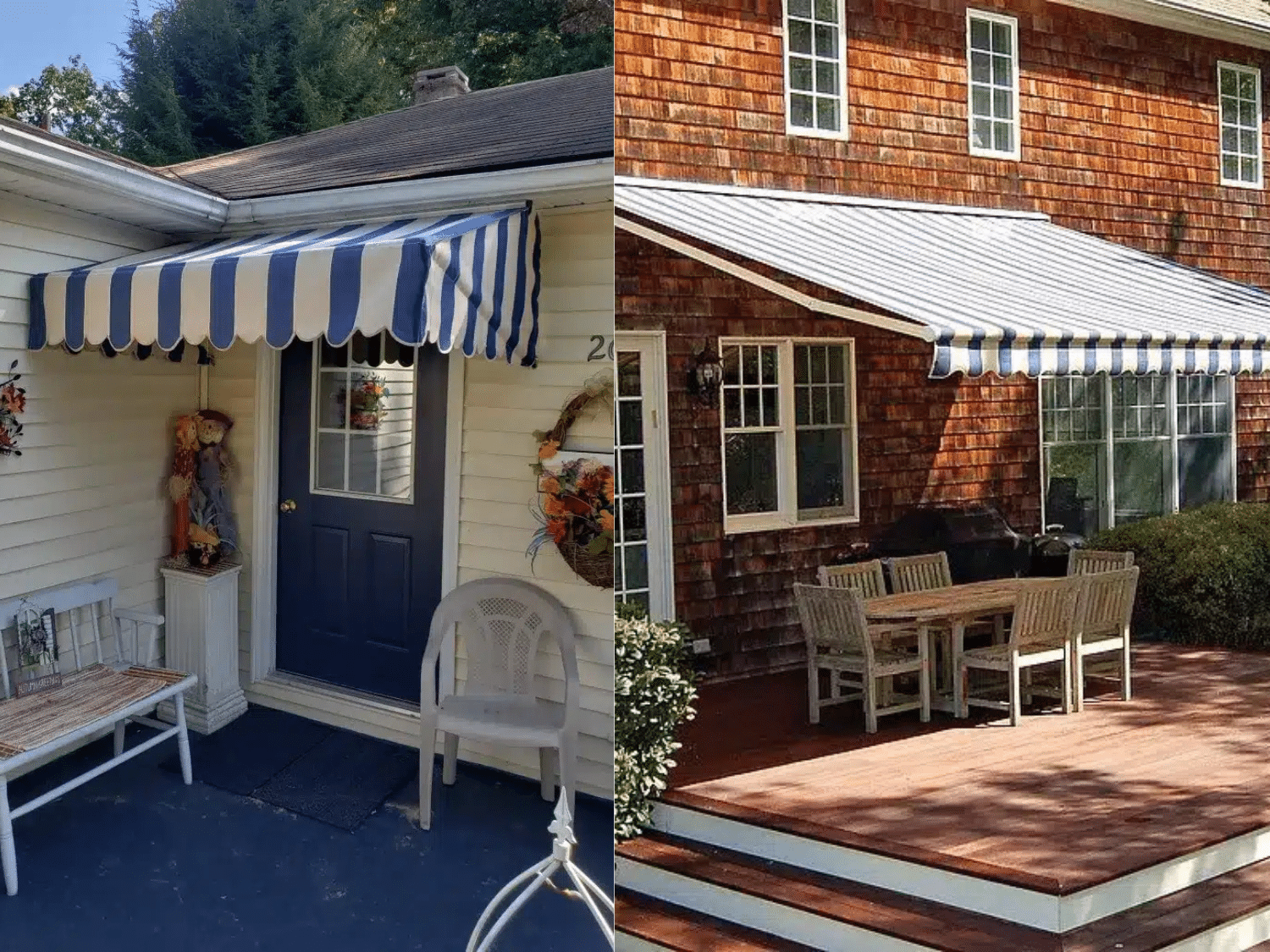
Are you looking to add shade and weather protection to your home or business? Are you finding it overwhelming to make a concrete choice between retractable and fixed awnings?
Your hesitation is understandable. Both options offer distinct advantages after all. The right choice boils down to your specific needs, budget, and climate conditions.
In this guide, we help you better understand the key differences between these two awning types. This way, you can make an informed decision and enhance your property’s functionality and value for years to come.
Fixed vs. Retractable Awnings: What’s the Difference?
What Is A Fixed Awning?
A fixed awning is permanently attached to your building and stays in the same position year-round. Think of it as an extension of your roof. Once installed, it doesn’t move, fold, or retract.
These awnings are built with a sturdy frame (typically aluminum or steel) and covered with durable fabric or metal materials. You’ll find them over storefronts, restaurant patios, and residential entrances that need consistent protection.
Fixed awnings primarily excel at providing consistent shelter from sun, rain, and snow. They’re designed to handle whatever weather comes their way without requiring any action from you.
What Is A Retractable Awning?
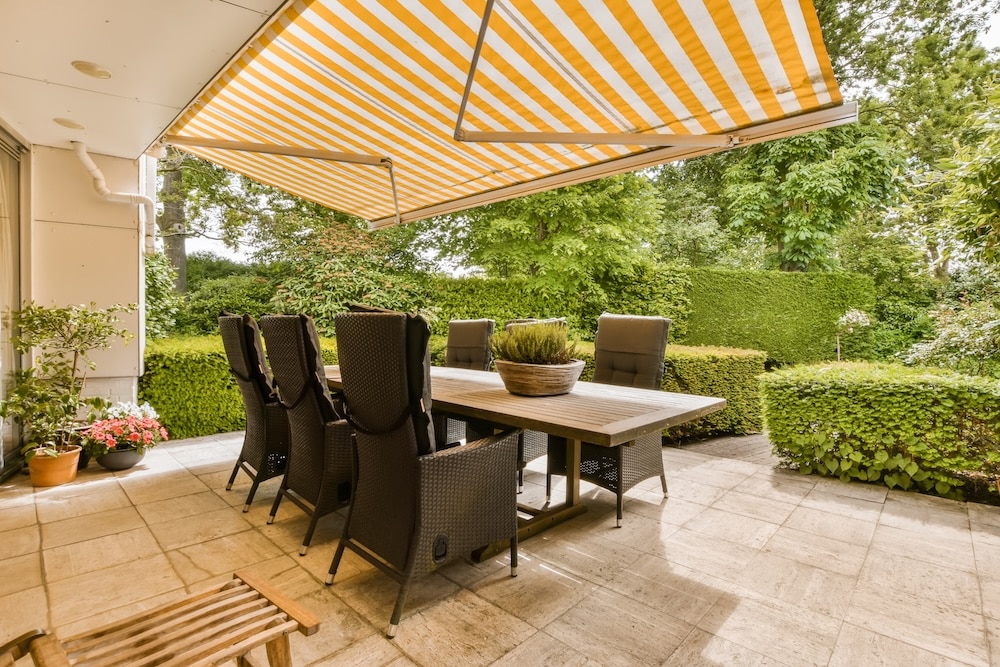
A retractable awning gives you control over when you want shade and when you don’t. You can extend it when the sun gets intense and retract it when storms approach or when you want full sunlight.
Most retractable awnings operate manually with a hand crank, though motorized versions are increasingly popular. The awning fabric rolls up into a protective cassette or housing when not in use.
Such flexibility makes retractable awnings ideal for patios, decks, and outdoor dining areas where you want options. You get shade when you need it and open sky when you prefer it.
Retractable vs. Fixed Awnings: Side-by-Side Comparison
Flexibility
Retractable awnings are the clear winner when it comes to flexibility. You control exactly when and how much shade you get. Their adaptability works especially well for seasonal changes.
Fixed awnings, on the other hand, offer zero flexibility once installed. They provide the same coverage regardless of weather, season, or your preferences.
While this consistency works well for some applications, it means you’re stuck with permanent shade even when you might prefer direct sunlight.
Durability
Fixed awnings typically outlast retractable ones in harsh conditions. Their permanent installation and simpler design mean fewer moving parts that can break or wear out. The frame stays rigid and doesn’t experience the stress of repeated extension and retraction.
Heavy snow loads, strong winds, and severe storms generally pose less risk to fixed awnings because they’re built to handle these conditions continuously.
Conversely, retractable awnings have more mechanical components (i.e., arms, springs, motors, and fabric rolls) that can eventually need repair or replacement.
That said, their ability to retract during severe weather actually protects them from damage that might destroy a fixed awning.
Maintenance
Fixed awnings require minimal ongoing maintenance. Sure, you’ll need occasional cleaning and inspection for loose fasteners or fabric damage, but that’s about it. No moving parts mean fewer things can go wrong.
It’s this simplicity that makes these awnings particularly appealing for commercial properties where maintenance time equals money.
Their counterparts need more attention, however. Moving parts require periodic lubrication. You also need to inspect the extension mechanism regularly. Further, motorized versions may need electrical maintenance or motor replacement over time.
Tip: Don’t know the first thing about awning maintenance? Check out our quick awning owner guide for expert advice.
Weather Resistance
Fixed awnings are engineered to withstand whatever nature throws at them. As agreed, they’re designed for permanent exposure to wind, rain, snow, and UV rays. Plus, quality fixed awnings can handle significant snow loads and wind speeds that would damage other structures.
As such, they’re ideal for regions with severe weather patterns or where awnings must provide year-round protection.
Retractable awnings offer a different approach to weather resistance. Did you know that many modern retractable awnings include wind and sun sensors that automatically retract the awning when conditions become dangerous? This feature protects both the awning and your property.
Cost
Typically, fixed awnings cost less upfront than retractable ones. Their simple design and installation process keep initial expenses down. For businesses or homeowners on tight budgets, fixed awnings provide the most ‘shade coverage’ per dollar spent.
Retractable awnings command higher prices due to their complex mechanisms and installation requirements. A motorized awning costs significantly more than manual ones, too, and larger sizes increase the price substantially.
Lifespan
A well-built fixed awning can last 15-20 years or more with minimal maintenance. The absence of moving parts contributes to their longevity, though you may need to replace the fabric every 10-15 years, depending on sun exposure and weather conditions.
Alternatively, retractable awnings typically last 10-15 years. Mechanical components potentially need attention before the fabric wears out. Regular maintenance extends their life, but the design complexity means more potential failure points.
What’s the trade-off? Retractable awnings often maintain a better appearance longer since the fabric isn’t constantly exposed to UV rays and weather.
Aesthetics
If you don’t mind committing to a look year-round, then by all means go for fixed awnings. They become part of your building’s design and can enhance curb appeal when chosen carefully.
Want some flexibility and versatility? Then retractable awnings are your answer. When retracted, they’re barely noticeable, retaining your building’s original appearance. When extended, they can complement outdoor entertaining spaces.
Factors to Consider When Choosing An Awning For Your Home Or Business
Climate
Your local weather patterns play a huge role in awning selection. Building codes require awnings to handle specific wind and snow loads, and these requirements vary by region.
Areas with frequent high winds favor retractable awnings since you can retract them during storms. However, fixed awnings can handle uplift forces of 12-26 pounds per square foot when properly engineered.
Heavy snow regions need awnings designed for significant load-bearing. Some codes require awning frameworks to support at least 15 pounds per square foot without snow drift considerations.
Tip: If you live where severe weather is common, discuss your local conditions with your awning supplier to ensure proper engineering and materials selection.
Usage Needs
How do you plan to use your outdoor space? This question is the driving force behind your choice of awning.
Need occasional shade for weekend barbecues or morning coffee? Retractable awnings extend coverage only when desired. You can always just retract them if you or your outdoor plants and garden need some sun.
Want consistent weather protection for outdoor dining areas or storefronts? Fixed awnings provide reliable shelter regardless of conditions. They’re ideal for businesses that need dependable coverage for customers year-round.
Aesthetic Preferences
Remember that your awning becomes part of your property’s visual appeal. Think about your property’s style, neighborhood character, and personal taste.
Some homes look best with traditional fixed awnings, while modern properties often benefit from retractable options’ clean lines.
Budget
Upfront costs vary significantly between awning types. As aforementioned, fixed awnings typically cost less. You’re only investing in basic materials and straightforward mounting.
Retractable awnings require a higher initial investment, especially motorized versions. However, consider long-term value. That includes potential energy savings and the flexibility to adapt to changing needs.
Factor in ongoing costs as well. Fixed awnings need minimal maintenance, while retractable units may require periodic mechanical service.
Finally, budget for quality regardless of the type chosen. Cheap awnings often cost more long term through frequent repairs and premature replacement.
Automation and Convenience
Ask yourself: How much control do you want over your shade?
Manual retractable awnings, for instance, require physical effort to extend and retract. Some homeowners find this inconvenient during bad weather or as they age.
Motorized retractable awnings, on the other hand, offer the convenience of a push-button mechanism. They can include sensors that automatically respond to wind, sun, or rain. This automation protects your investment and guarantees optimal comfort.
Fixed awnings are forever simple; no operation is ever required. This appeals to business owners who don’t want staff managing awning operations or homeowners who prefer set-and-forget designs.
All things considered, account for your lifestyle, physical capabilities, and how often you’ll realistically adjust a retractable awning before deciding on a manual, motorized, or fixed option.
Local Building Codes or HOA Rules
Permit requirements can influence your awning choice. Many areas don’t require permits for retractable awnings since they’re considered temporary structures. However, larger awnings extending more than 4-6 feet from buildings often need approval.
More commonly, fixed awnings require permits due to their permanent nature and structural impact. Their permitting process adds time and cost but ensures compliance with local safety standards.
Additionally, historic districts and HOAs often have specific rules about exterior modifications. Some restrict colors, materials, or styles. Others prohibit certain awning types entirely.
So, contact your local building department and HOA before making final decisions. It’s better to know requirements upfront than face removal orders or fines later.
When To Choose A Fixed Awning For Your Home Or Business
Fixed awnings excel in situations where consistent, reliable protection matters more than flexibility. They’re the smart choice when you need permanent weather shelter and want minimal maintenance responsibilities.
As such, commercial properties particularly benefit from fixed awnings. Restaurants with outdoor seating could also benefit from them. They provide constant coverage that doesn’t rely on staff remembering to extend awnings before customers arrive.
Retail storefronts are another great business that’ll benefit from a fixed awning. They help create consistent branding and weather protection for merchandise displays.
As for homeowners, you might need a fixed awning if you have areas requiring constant protection. Entryways, large windows facing harsh sun, or outdoor equipment areas all benefit from permanent coverage.
So, choose a fixed awning when you have:
- A year-round need for consistent shade and weather protection
- Limited budget for initial installation
- Commercial property requiring reliable customer coverage
- Areas with extreme weather where retractable mechanisms might fail
- Minimal interest in seasonal flexibility or adjustment
- Architectural style that benefits from permanent design elements
Final Say: Fixed awnings make sense if you prefer simplicity. No moving parts mean no maintenance schedules, no worrying about retracting before storms, and no mechanical failures during peak usage times.
When To Choose A Retractable Awning For Your Home Or Business
Retractable awnings are perfect for homeowners who want control over their outdoor environment and businesses that need to adapt their spaces for different occasions.
For homeowners, your patio, deck, or outdoor dining area becomes much more versatile with retractable awnings. You can enjoy the morning sunshine with your coffee, then extend the awning when relaxing in the afternoon.
Businesses benefit from this adaptability, too. Cafes can adjust coverage based on weather and customer preferences. Even event venues can create intimate covered spaces or open-sky experiences as needed.
With that, choose a retractable awning when you want:
- Flexibility to enjoy both sun and shade as desired
- Seasonal adaptability for changing weather patterns
- Modern aesthetic that disappears when retracted
- Energy savings through strategic seasonal shading
- Control over outdoor ambiance and lighting
- Protection from sudden weather changes through retraction
Final Say: If you appreciate having options and don’t mind paying more upfront for long-term versatility, retractable awnings are the best choice for you.
FAQs
What is the average cost of a retractable awning?
Retractable awnings typically cost $1,500-$4,000 for manual models and $2,500-$6,000 for motorized versions, depending on size, materials, and features.
What are the benefits of retractable awnings?
Retractable awnings offer flexibility, energy savings, weather protection when extended, and fabric preservation when retracted.
What is the best retractable awning?
The best retractable awning depends on your needs. That said, look for quality frames, durable fabrics, reliable mechanisms, and professional installation from reputable suppliers.
What sizes do retractable awnings come in?
Retractable awnings range from 8 to 40 feet wide with projections of 5 to 13 feet. Custom sizes are available for specific applications and spaces.
Contact Us Today
Ready to explore awning options for your Pittsburgh-area property? Our experienced team can help you choose between retractable and fixed awnings based on your specific needs and budget. Contact us today or fill out this quick form to get your free estimate!