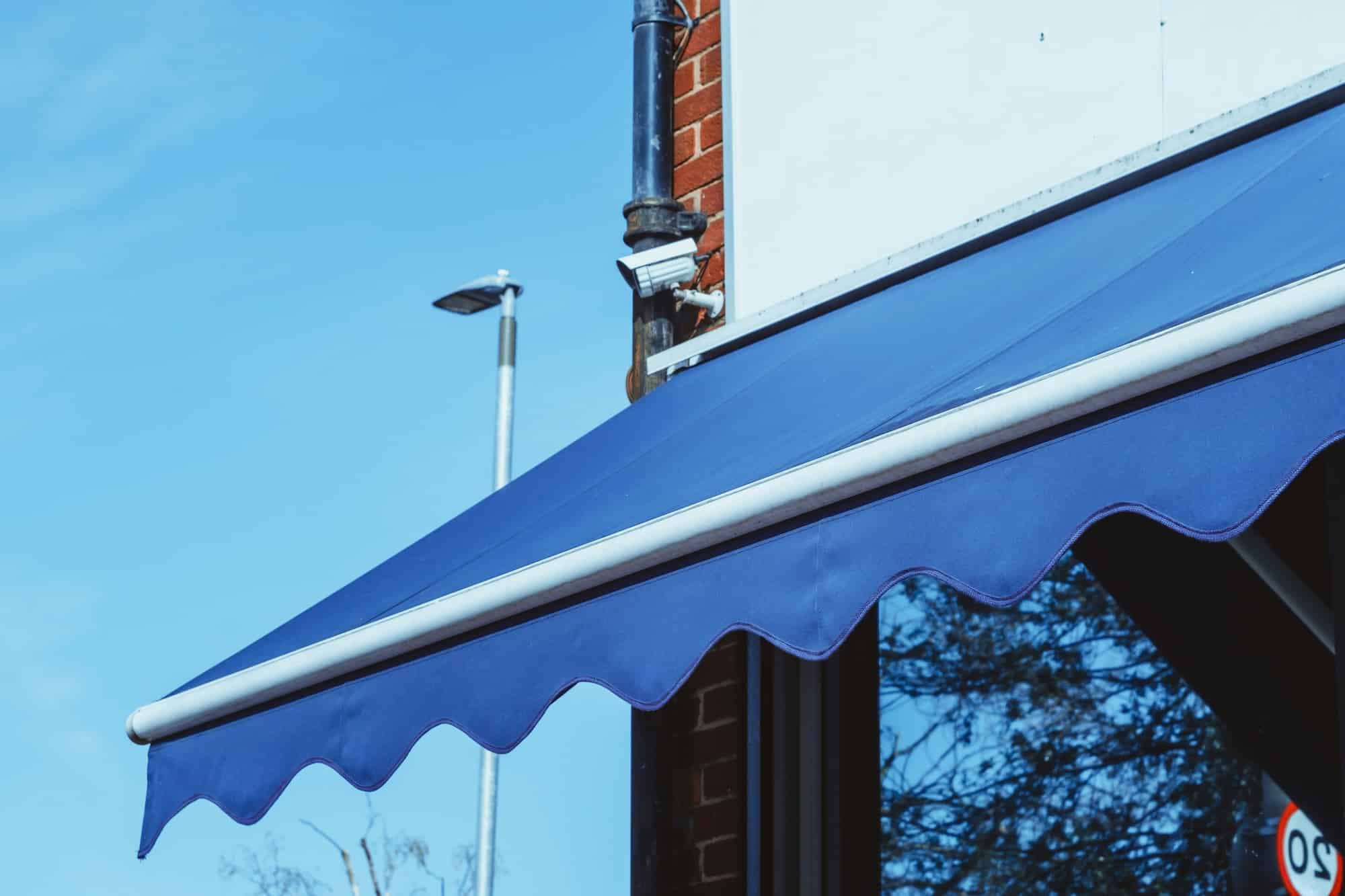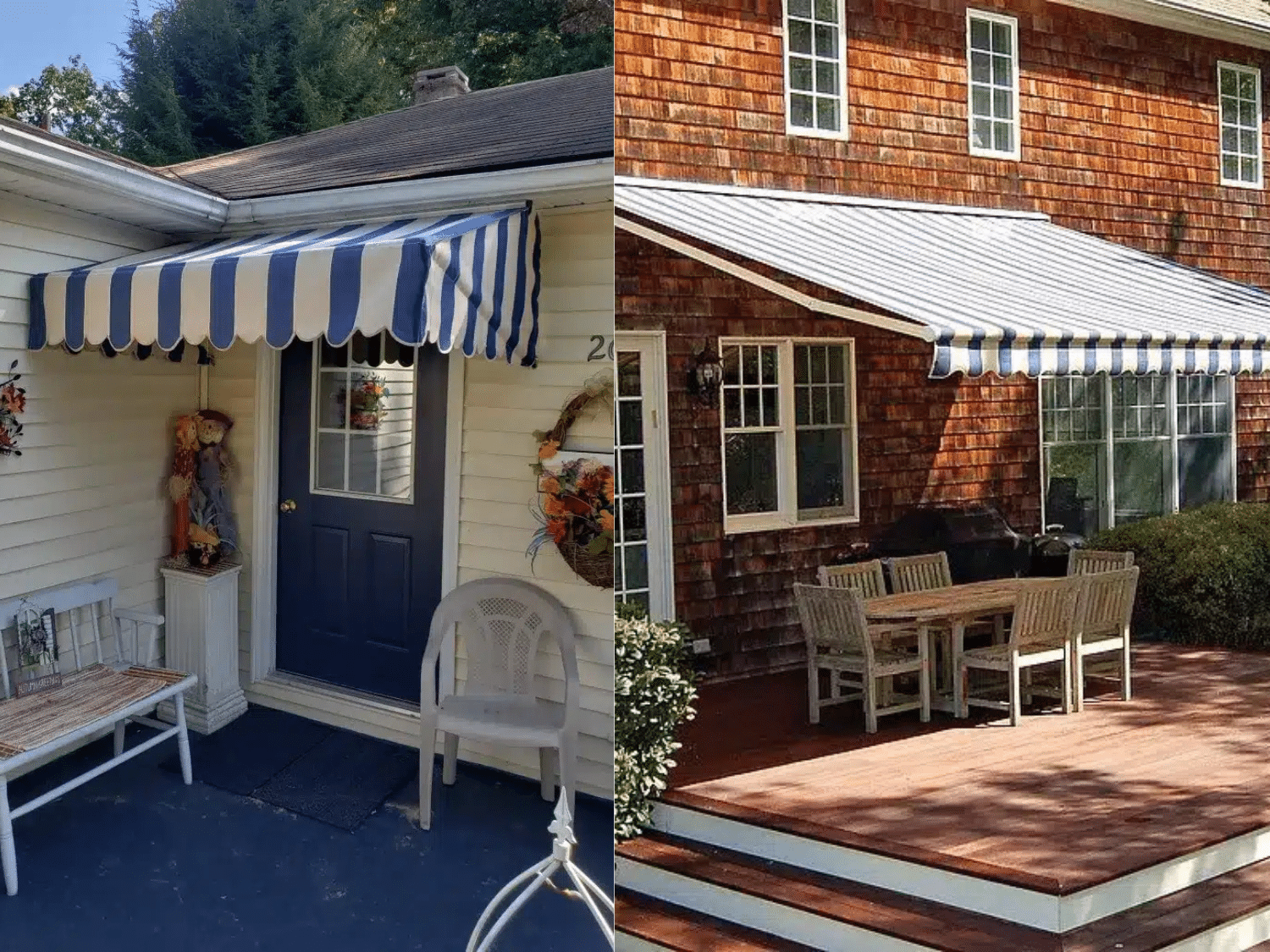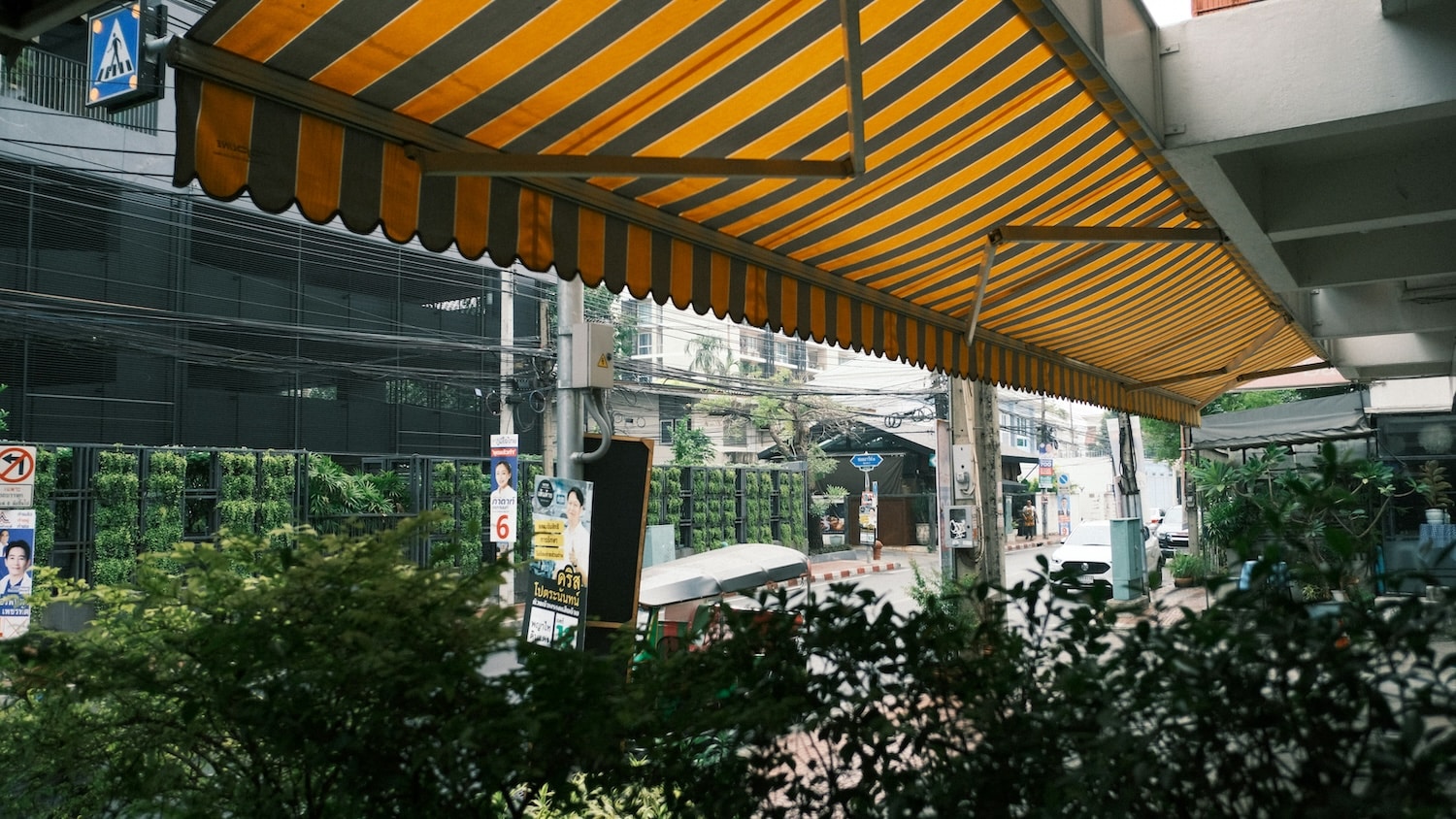
A cool, comfortable outdoor space can make a world of difference to how much you can enjoy your home.
Whether you’re looking to add shade over your patio, shield your deck from the harsh weather, or reduce indoor glare, installing an awning can be a practical solution.
Retractable awnings have become increasingly popular because of their versatility. They can provide shade when needed. But they can also easily be retracted for situations where you’d prefer more sunlight.
If you’re planning to invest in one, you may wonder how much a retractable awning costs.
The answer typically depends on several factors, such as the location, size, material, and model type. Here’s a comprehensive cost breakdown and some insight on what to expect.
Average Cost of Retractable Awnings in 2026
The cost for installing a retractable awning can vary wildly. In 2026, homeowners can expect to spend anywhere between $400 to $4,000. That’s for manual retractable awnings that require hand operation.
On the other hand, motorized retractable awnings can be expensive, generally falling between $2,500 to $8,000. Premium custom and commercial designs can cost up to $10,000 or more.
What Affects the Cost of a Retractable Awning?
Where you live can be a huge factor in how much you’ll have to spend on a retractable awning. That, alongside the placement, material, and size, is one of your primary considerations.
Placement and Size
Size is usually the biggest factor for awning price.
Where are you planning to place the awning? Windows and doors typically only require about 4 to 8 feet of fabric to reduce sunlight and help protect nearby furniture from fading.
If you’re planning to cover a deck, patio, or other large outdoor spaces, you may need coverage such as 10 by 8 feet or 20 by 12 feet.
Retractable awnings for windows and doors can set you back a few hundred bucks. But for patios, balconies, and pool setups, the price can reach thousands because wider awnings require more fabric, support, and expertise to install.
Location
In addition to the placement, the material and labor costs in your area will noticeably affect how much you’ll pay to purchase and install a retractable awning.
Different cities often have different price tags and rates for contractors.
For those who live in major metropolitan areas, expect to pay more for the retractable awning and its installation than in rural regions.
For example, homeowners in New York and Chicago may spend $400 to $800 for a small retractable awning for a door or window. Deck and patio awnings can cost significantly more, ranging from $1,500 to $7,000.
Local demand may also play a role. Contractor rates are commonly higher in markets with higher demand for retractable awnings.
Fabric and Frame Material
The fabric you choose is just as important when considering an investment in an awning.
Many brands use aluminum for the frame because it’s lightweight and corrosion-resistant, though heavy-duty alternatives are available for commercial applications.
A variety of fabrics are used for outdoor canopies. Acrylic and vinyl are among the most common awning materials, and there are also water-resistant options available. The good news is that these materials are usually not far apart in price.
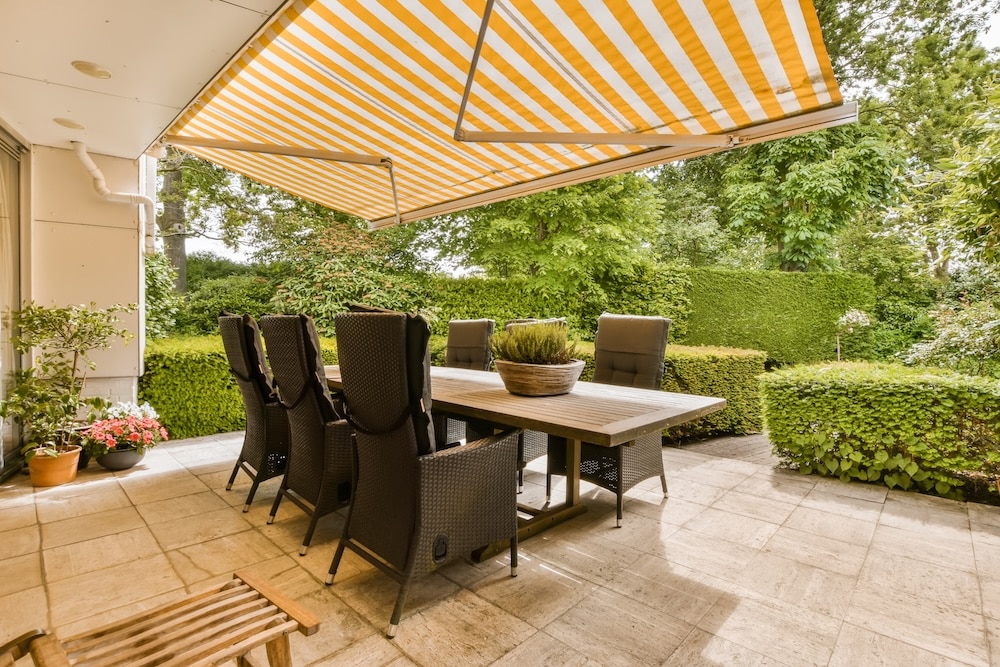
Types of Retractable Awnings and Their Prices
Retractable awnings can be manually operated or motorized, depending on your preference. Both systems have their advantages and drawbacks.
Manual vs Motorized Retractable Awning
In most cases, manually operated retractable awnings are more affordable. They work by simply turning a crank to extend or retract the shade. They’re best suited for small patios, narrow decks, and side doors.
Prices for a basic manual setup start at $400 to $1,500, while custom designs may cost more.
One drawback is that because they’re often made from plastic components, you may need to replace them every few years.
Motorized versions are more conveniently operated using a push-button to unfold and retract. The frames feature sturdier materials, and upgrades may be available.
Depending on the size, you can expect to pay $2,000 to $6,000 for a standard motorized retractable awning, installation included.
Beyond the higher upfront cost, installation may also require an electrician, which can further increase labor expenses.
Full Cassette and Smart Sunshades
Full cassettes are premium awning systems. In these models, the motor, fabric, arms, and rollers are protected by a weather-proof casing when retracted.
Because the components are shielded from the sun and rain, a full-cassette retractable awning generally lasts longer than a manual or basic motorized alternative.
A full cassette setup may come with LED lighting, adjustable pitches, and weather sensors. Depending on the features and build quality, costs typically range from $5,000 to $8,500.
Smart sunshades are exactly that, smart. They offer voice control, sun tracking, and automatic extension/retraction. These are made of high-quality materials and fabrics, which means they’re priced at a premium.
Awnings of this type can set you back $5,000 up to $10,000 or more, but they can be a worthwhile investment for high-use outdoor spaces.
Commercial Retractable Awnings
For small business owners or those who need a wider shade coverage for outdoor activities, commercial retractable awnings could be the solution.
As they’re specifically designed for commercial use, these awnings are highly durable and can withstand prolonged exposure to the elements.
There are many brands to choose from, with prices starting at $5,500 and scaling up with size and features.
Retractable Freestanding and Sailcloth Awning
A freestanding retractable awning could be a versatile choice for on-demand shade and weather protection without investing in a major renovation.
Unlike wall-mounted awnings, freestanding canopies can be moved anywhere—wherever you need shade the most.
You can buy a freestanding awning for around $500 to $5,000. Premium motorized models can ramp up to $7,000.
For people looking for cheaper options, a shade cloth can be a cost-effective solution. They’re also called sailcloths, and, in many cases, you won’t need to pay for a professional to set them up for you.
You can simply tie the fabric over the area you want to shade and roll it up when you no longer need it. You can get a shade cloth for $25 to $150 for a standard size.
Professional Awning Installation Price
Installation price varies by size and complexity, with expert technicians charging $300 to $2,000. Services can include:
- Assessing and measuring the site
- Mounting the support hardware
- Installing the awning
- Electrical connection for motorized and smart units
- Safety and operational testing
- Workmanship and installation guarantee
DIY installation options are available, which can save you $200 up to $1,000 on labor costs. However, this is only recommended for smaller-sized, manual awnings.
Setting up automated awnings requires working electrical knowledge and experience. Otherwise, you could be risking damaging the product, losing your money’s worth, or, worse, hurting yourself.
It’s often best to work with a professional installer to ensure safe and proper setup.
Are Retractable Awnings Worth the Cost?
Retractable awnings are, in most cases, worth the cost. Apart from the convenience, high-quality awnings enhance outdoor living without the expense of massive structural additions.
Another huge benefit is the energy savings they provide.
By blocking sunlight from entering your home, retractable awnings help maintain cool indoor temperatures. This means your AC unit won’t have to work as much to keep your home cool in the summer.
Sunlight and UV rays can also damage furniture. Wooden pieces are particularly vulnerable to heat and may fade over time, while drapes and rugs can lose their color with prolonged sun exposure.
Installing retractable awnings helps protect your furniture, such as a favorite lounge chair placed near a window.
With proper maintenance, retractable canopies remain pristine longer than fixed awnings because of their flexibility.
You can extend the shade during warmer months and retract it in winter to allow more sunlight. This also helps reduce exposure to fluctuating weather conditions.
Strong storms and heavy snowfall can quickly damage fixed awnings, a problem you’re less likely to worry about with foldable shades.
Important Considerations For Retractable Awnings
Are there drawbacks?
The relatively high upfront cost is one drawback of retractable awning systems. However, if your family spends plenty of time outdoors, the comfort they provide is certainly worthwhile.
Not to mention, you’ll also be saving money on your energy bills in the long run, which may help offset the initial expense.
Another important consideration is the maintenance required.
Automated awnings will need to be cleaned regularly. The fabric can collect dust and dirt, and the metal components can rust if not maintained. Mildew buildup is a common and damaging issue.
Routine cleaning multiple times a year using water and mild soap is necessary. Fabrics will need to be replaced every 10 to 15 years.
Cleaning services for awnings are available in many cities. In addition to cleaning, maintenance companies can reapply waterproofing and UV sealants for roughly a dollar per square foot. This goes for both fixed and retractable canopies.
Smart, hands-free units, which are already more expensive, can be costly to repair.
Many of these brands have built-in sensors allowing them to retract when it rains. When damaged, replacing these detectors tends to be steeper. This can be an issue in areas with extreme climates.
You can reach out to your local awning contractor for consultation to see whether a retractable awning system is suitable for your property.
Retractable Awning Cost vs Fixed Awnings
Fixed awnings are typically more affordable than retractable ones, with prices ranging from $500 to $2,000.
Because there’s no motor, electricity, or complex components, they’re straightforward to install with cheaper labor. If you’re on a tight budget, stationary canopies for windows and entryways are a great recourse.
Fewer moving parts mean easier maintenance, which could extend the unit’s life.
The tradeoff is that you can’t adjust a fixed awning based on the weather. And the constant exposure to the sun and rain can wear the fabric faster than its retractable counterparts.
A fixed awning fabric will need to be swapped out every 8 to 12 years. Replacements can cost between $300 to $1000, depending on the size and material.
How to Save Money on a Retractable Awning
There are a number of cost-saving strategies you can use to make your awning project a reality without breaking the bank.
Compare Multiple Quotes
You don’t have to stick to one supplier or installer. Comparing multiple quotes is a smart way to get a clear picture of pricing and labor costs.
It’s worth noting that the cheapest isn’t always the best choice for a contractor. Consider the quality of materials, warranty duration, and whether the installers are experienced and reliable.
Pick the Right Size
Again, the awning size is a major driver of cost. It’s easy to fall into the misconception that larger awnings are always better, but that’s not always the case.
To save money, work with a professional to measure your patio, deck, or poolside. Focus on the areas you actually need to shade to avoid paying more than necessary.
Think of the maintenance cost that an oversized awning demands!
Choose Only the Features You’ll Need
Smart retractable awnings with sensors and remote controls may sound attractive, but these features can also considerably drive up the price.
Before deciding, think about how you’ll use the awning. Automated canopies may be ideal for a spacious patio and balcony, but a small deck can work well with a manual unit.
Schedule Installation During Off-Season
As in any product, there are certain times in the year when demand for awnings can skyrocket. This usually happens around late spring to mid-summer (May to July).
With the contractors’ schedules jam-packed, wait times can become significantly longer.
To beat the seasonal rush, experts recommend booking your awning installation in early spring or late winter. In addition to faster turnarounds, companies may even offer off-peak discounts.
Why Choose Venango Awning for Installation
The right partner can make all the difference when installing a retractable awning.
Venago Awning is a trusted provider of retractable awnings for homes and businesses in Pittsburg, PA. We bring over 70 years of industry experience in awning installation, take-down, storage, cleaning, and repair.
We serve the Greater Pittsburgh area, from Sewickley and Cranberry to Bethel Park, Greensburg, and Uniontown.
Reach out to Venango Awning for all your awning concerns and needs today!
FAQs
How long do retractable awnings last?
Retractable awnings are designed to endure long-term abuse, with many well-maintained canopies lasting 10 to 20 years. The material quality, local climate, and upkeep routines can all contribute to longevity.
Do retractable awnings increase home value?
Retractable awnings not only improve your property’s curb appeal. They can also significantly boost your home’s value with an estimated ROI of up to 70%.
Shaded patios and decks are more usable, which can translate to a substantial improvement in comfort. The energy-saving potential of awnings in windows and entryways makes your home more appealing to buyers.
What size retractable awning do I need?
The size of the retractable awning you’ll need depends on the area you want to shade. A technician will typically assess the site to determine this, considering factors such as dimensions, sun exposure, and furniture placement.