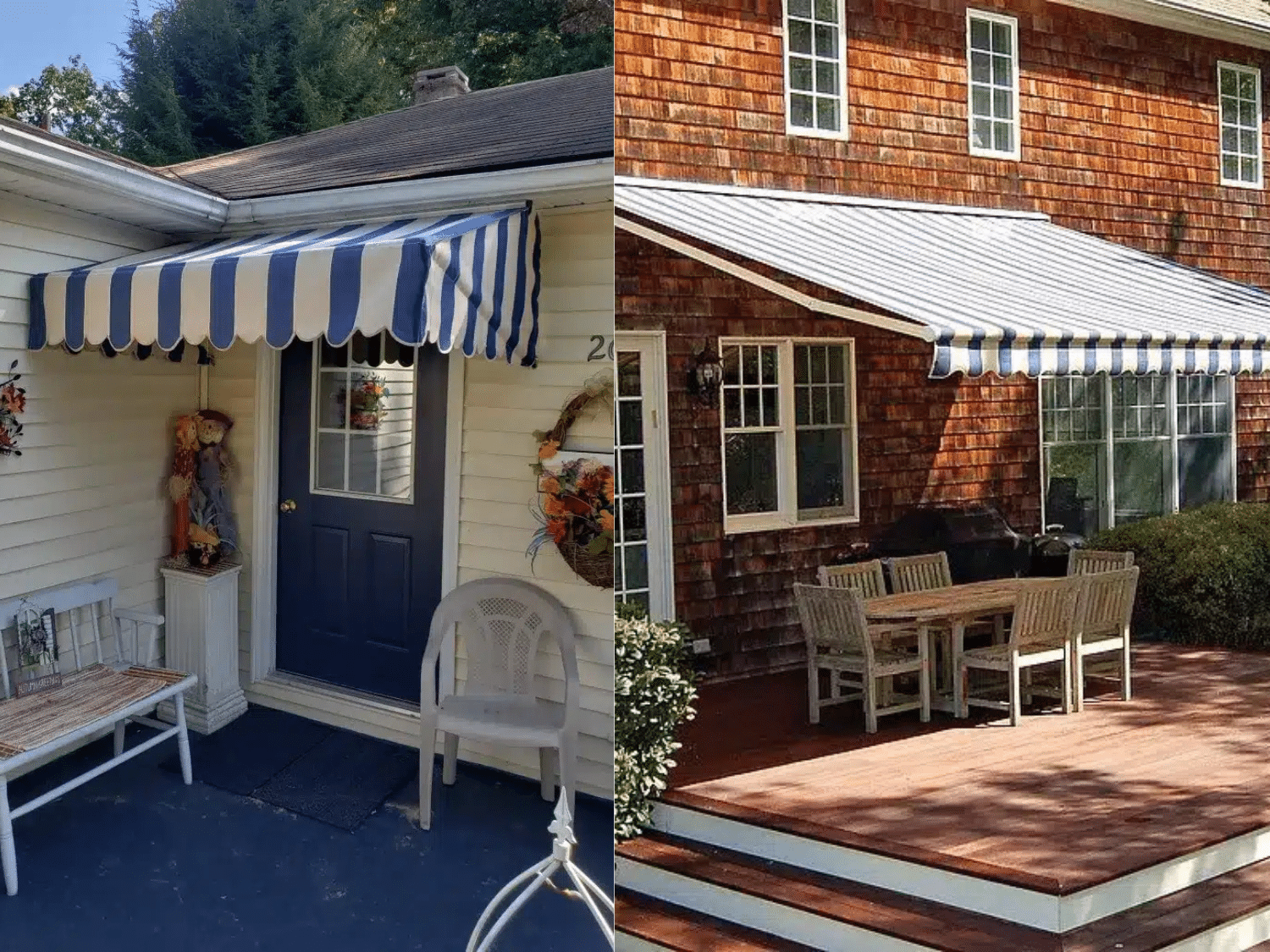
Retractable awnings are one of the smartest investments you can make for outdoor comfort, but like any exterior product, they don’t last forever. On average, a well-made retractable awning will give you 10–15 years of reliable service before needing replacement.
The exact lifespan depends on the quality of materials, local weather exposure, how often you use it, and, most importantly, how well you maintain it.
In this guide, we’ll break down the real-world longevity you can expect, the factors that shorten or extend that timeline, and practical steps to get the maximum years out of your awning.
Whether you’re researching before buying or trying to stretch the life of an existing one, you’ll know exactly what to expect.
What Is A Retractable Awning?
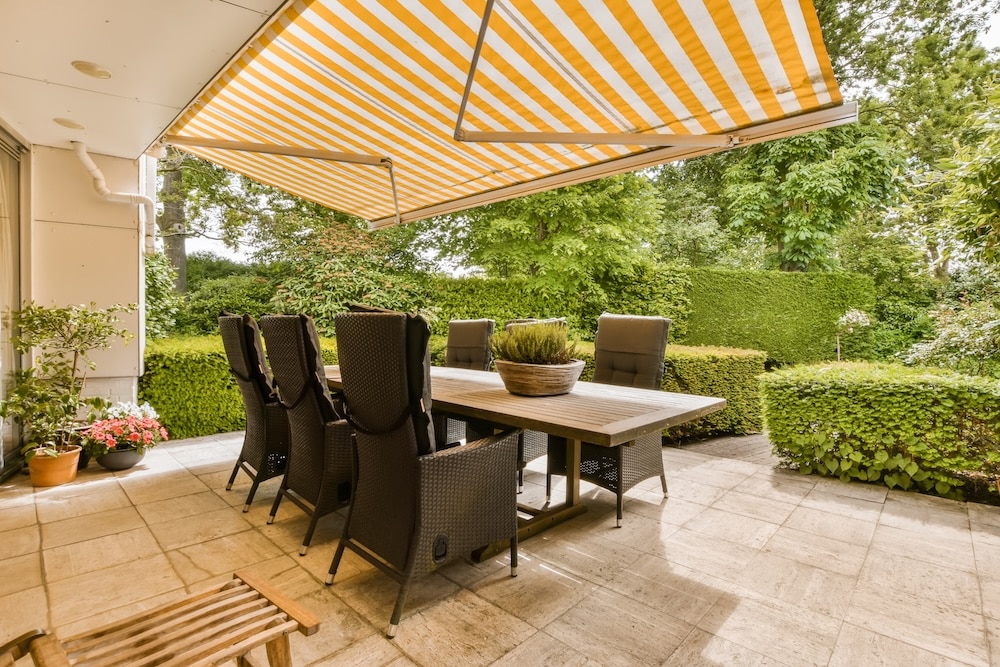
A retractable awning is an adjustable fabric canopy that extends from your home or business to provide shade and weather protection, then rolls back into a protective cassette or hood when not needed.
Unlike fixed awnings, retractable models let you control sunlight and exposure instantly, either manually with a crank or automatically with a motor and remote.
Modern retractable awnings are built with aluminum frames, stainless-steel hardware, and UV-resistant fabrics such as solution-dyed acrylic or PVC mesh.
They’re designed to withstand everyday outdoor conditions while adding curb appeal and reducing cooling costs by up to 25%.
Because the fabric is stored inside a cassette when retracted, it stays cleaner and better protected than traditional stationary awnings.
Average Lifespan of Retractable Awnings
You’re looking at a lifespan of roughly 5 to 15 years for most retractable awnings. That’s a pretty wide range, because not all awnings are created equal.
Better materials and construction push you toward the higher end of that range, while cheaper options tend to wear out sooner. The frame and mechanical parts usually outlast the fabric, which is typically what needs replacement first.
Where that wide range comes from mostly has to do with quality and conditions. Basic awnings might give you 5 to 7 years. Mid-range options with decent materials usually last 8 to 12 years. Meanwhile, higher-end awnings with solution-dyed acrylic fabric and well-engineered frames can go 12 to 15 years or longer.
Your climate plays a role, too. An awning in a temperate area with moderate sun will naturally last longer than one that gets blasted by intense heat, UV rays, or frequent storms. Then again, taking care of it properly helps, regardless of what you buy.
Lifespan by Material and Type
Material choice has a direct impact on how long your awning lasts. Solution-dyed acrylic is generally considered the best fabric option, lasting around 8 to 12 years. The color goes all the way through the fiber instead of just sitting on the surface, so it resists fading much better.
Polyester costs less, but typically only lasts 5 to 7 years before showing wear. Vinyl-coated fabrics handle water well and last about 7 to 10 years, though they don’t breathe as well as acrylic.
The frame material matters just as much. Aluminum is lightweight and doesn’t rust, often lasting 15 to 20 years with minimal maintenance. Steel is stronger but needs a protective coating to prevent rust. You’ll get 10 to 15 years from a well-treated steel frame.
As for manual versus motorized mechanisms, quality motorized systems can last just as long as manual ones if you maintain them. The motor might need occasional service, and you’ll replace remote batteries now and then, but the mechanism itself holds up well.
Factors That Affect How Long Retractable Awnings Last
Several factors determine whether your awning hits the 5-year mark or sails past 15 years. Some of these you can control, others depend on where you live.
Understanding what impacts longevity helps you make smarter decisions both when buying and after installation.
Fabric Material
We touched on this already, but it’s worth emphasizing. Fabric quality is probably the single biggest factor in awning lifespan.
The fabric takes the brunt of sun exposure, rain, and general wear, so cutting corners here usually means replacing your awning sooner.
If you’re choosing between a higher-end fabric and a basic one, the premium option almost always pays for itself over time through extended lifespan.
Weather conditions
Your local climate directly affects how long your awning lasts. Constant sun exposure breaks down fabric fibers and fades colors over time. Heavy rain, snow, and ice can stress both the fabric and mechanical components.
High winds put strain on the frame and arms. If you live in an area with harsh weather, whether that’s intense desert sun, frequent storms, or heavy snow, expect your awning to age faster than one in a milder climate.
That doesn’t mean you shouldn’t get one. Just that maintenance becomes more important, and you might need to replace the fabric sooner.
Maintenance habits
Regular maintenance significantly extends awning life. This isn’t complicated. We’re talking about basic cleaning, checking for loose hardware, and retracting the awning when appropriate.
In general, dirt, pollen, and debris that sit on the fabric can cause mildew and accelerate deterioration. Also, loose bolts or screws can create stress points that lead to bigger problems.
A little attention every few months prevents the most common issues and can add years to your awning’s lifespan. Neglect it entirely, and even a high-quality awning will wear out faster than it should.
Quality of Installation
Even the best awning won’t last if it’s installed poorly. Proper installation means the awning is securely attached to your home’s structure, the pitch allows water to drain correctly, and all components are aligned properly.
In sharp contrast, a poorly installed awning might sag, collect water, or put uneven stress on the frame. These issues accelerate wear and can even cause safety problems.
Professional installation costs more upfront but typically pays off through better performance and longer lifespan. At Venango Awning, proper installation is non-negotiable. It’s how they set up your awning to perform well for years.
Frequency of use
How often you extend and retract your awning affects its mechanical components. That said, retractable awnings are designed for regular use. That’s the whole point.
Using it frequently isn’t a problem as long as you’re not forcing the mechanism or leaving it extended in dangerous conditions. What does matter is whether you retract it appropriately.
Leaving your awning extended through storms, high winds, or snow puts unnecessary stress on every component. That’s why retracting it when conditions turn bad protects both the fabric and the frame.
How can I make my retractable awning last longer?
Follow these proven steps, and you’ll be on the high end of the lifespan range:
- Retract during high winds, heavy rain, snow, or when you’re away for more than a day.
- Install optional wind or sun sensors. Automatic retraction prevents storm damage.
- Clean the fabric gently twice per season with mild soap and a soft brush. Never use pressure washers.
- Hose off the frame and lubricate pivot points annually.
- Keep nearby gutters clean, as overflow water ruins the fabric fast.
- Schedule professional maintenance every 3–5 years (motor tune-up, bolt check, seam inspection).
- Choose solution-dyed acrylic and a protective cassette/hood from the start.
- Have repairs done promptly. Small tears become big ones quickly.
Venango Awning offers annual maintenance plans that handle everything on this list, giving Pittsburgh homeowners peace of mind and measurably longer awning life.
Signs It’s Time to Replace Your Retractable Awning
Eventually, every awning reaches the end of its useful life. Knowing when to replace it prevents safety issues and ensures your outdoor space stays functional.
Here are the key indicators that it’s time for a replacement:
- Visible fabric damage – Large tears, significant fraying along the edges, or fabric that’s become thin and brittle all indicate it’s time for replacement. Fading is mostly cosmetic, but if the color has degraded substantially, the fabric’s structural integrity is probably compromised too.
- Water pooling – If water collects on the awning when it should drain, the fabric has stretched, or the frame has sagged. This creates stress on the entire system and can lead to sudden failure. Address persistent pooling quickly.
- Frame damage – Bent or cracked arms, loose joints that won’t tighten, or visible rust on steel frames all compromise structural integrity. Sometimes you can replace individual components, but extensive frame damage often means it’s time for a new awning.
- Recurring mechanical issues – If your motorized awning’s motor fails repeatedly, or a manual crank becomes increasingly difficult to operate despite maintenance, the internal mechanisms are likely wearing out.
- Poor retraction or extension – If the awning doesn’t retract or extend smoothly, even after adjustments, something is wrong with the rolling mechanism or the fabric itself. This might be repairable in newer awnings, but in older ones, it usually indicates wear throughout the system.
FAQs
How much wind can a retractable awning withstand?
Most retractable awnings handle winds up to 20-25 mph when extended, though this varies by model and installation quality.
Some heavy-duty awnings are rated for higher speeds. That said, the safest practice is to retract your awning whenever the wind picks up significantly. Even if your awning is rated for 25 mph winds, gusts can exceed that speed quickly.
Wind sensors on motorized models automatically retract the awning when wind speeds get dangerous, which is a helpful safety feature.
Do retractable awnings break easily?
Quality retractable awnings are quite durable and don’t break easily under normal use.
Problems usually develop from improper use, like leaving them extended during storms, or from a lack of maintenance. Cheap awnings with poor construction are more prone to failure.
A well-made awning from a reputable manufacturer, properly installed and maintained, should hold up well to regular use for many years.
Do motorized retractable awnings last as long as manual ones?
Yes, motorized retractable awnings can last just as long as manual versions when properly maintained.
The motor itself is typically very durable, and quality motors are built to handle thousands of cycles. The main difference is that motorized systems have an additional component that might need service or replacement.
Motors can last 10-15 years or more, and they’re usually replaceable if they do fail. Manual crank mechanisms are simpler but can also wear out over time.
What is the best fabric for long-lasting retractable awnings?
Solution-dyed acrylic is the best fabric choice for longevity. The color is integrated throughout the fiber, making it highly resistant to fading from UV exposure. It also resists mildew, breathes well, and maintains its strength over time.
Brands like Sunbrella use solution-dyed acrylic and are known for durability. While it costs more than polyester or vinyl-coated fabrics, the extended lifespan and better performance make it worth the investment for most homeowners.
How much does it cost for a retractable awning?
Retractable awning costs vary widely based on size, materials, and features.
- Basic manual awnings typically start around $500-$1,500 for smaller sizes.
- Mid-range options run $1,500-$3,500.
- High-quality motorized awnings with premium fabrics and features can cost $3,500-$6,000 or more for larger installations.
Also note that custom sizes, additional features like wind sensors, and professional installation add to the cost.
At Venango Awning, we can provide detailed pricing based on your specific needs and help you choose an awning that fits your budget while delivering the quality and longevity you expect.