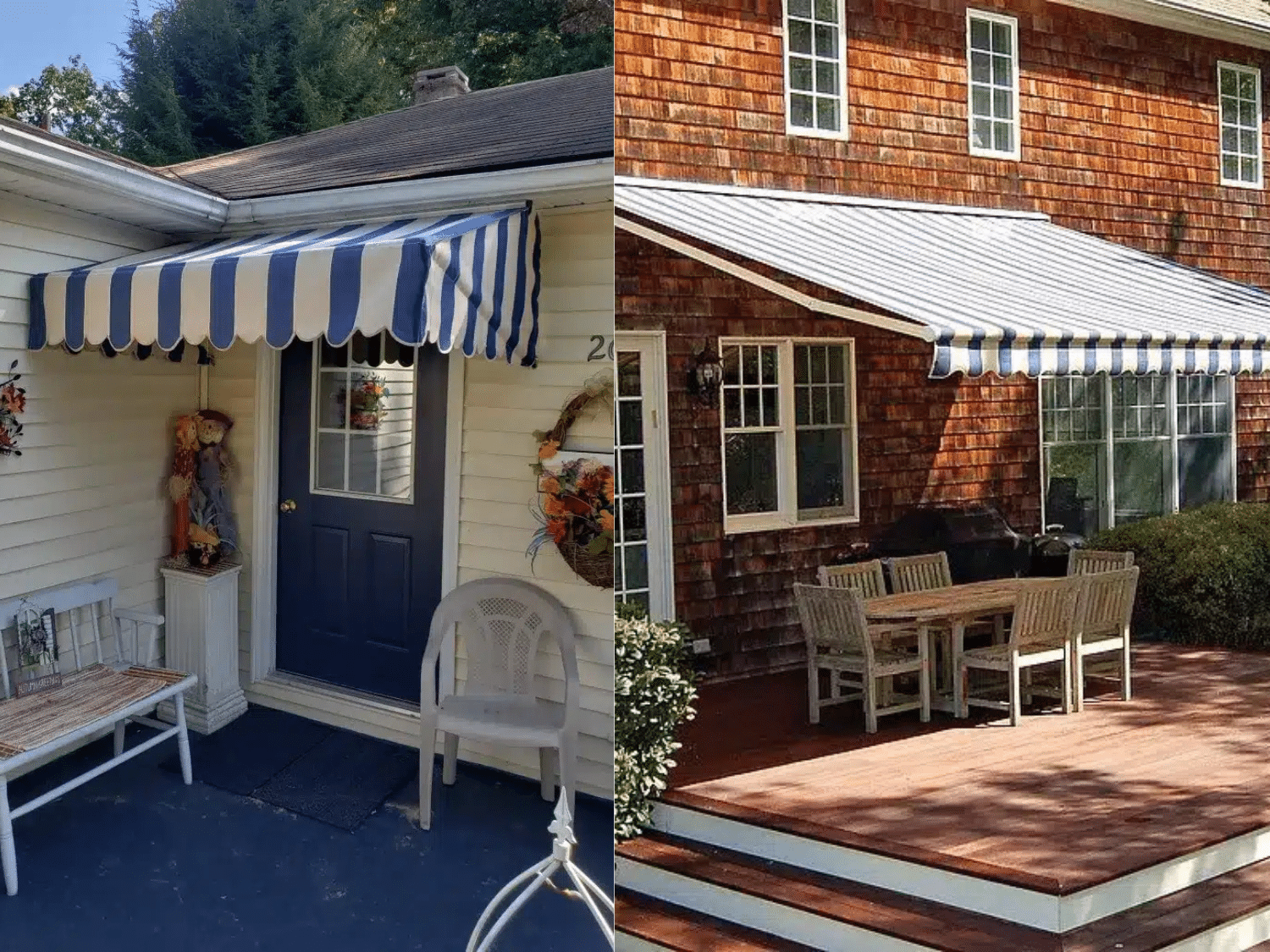
Mold and mildew can be a nightmare to clean, especially if they’ve been festering for a while! They can damage fabric, make it smell old and musty, and leave ugly stains that ruin its appearance.
The good news is that with the right cleaning technique, you can safely remove mold and mildew and restore your awning to its original, clean state!
This article shows you how to clean mold and mildew from canvas awnings without harming the material, plus tips on how to prevent mold and mildew growth in the future.
What Causes Mold and Mildew on Canvas Awnings?
On average, canvas awnings can last between 8 to 12 years, depending on factors like the weather, maintenance, and quality of the canvas material. Mold and mildew are among the leading causes of awning degradation, as they can weaken the fibers from within.
Here are the main contributors to mold and mildew on canvas awnings:
- Prolonged exposure to moisture: Rain, dew, or high humidity can leave the canvas fabric damp for extended periods, creating ideal conditions for mold growth.
- Poor ventilation: Limited airflow around the awning prevents moisture from evaporating, allowing mildew to thrive.
- Buildup of organic matter and debris: Organic matter and debris like leaves, pollen, bird droppings, and dirt can trap moisture and provide a food source for mold spores.
How to Identify Mold and Mildew on a Canvas Awning?
Mold and mildew on canvas awnings can be tricky to spot early because they can look like a bit of dirt or weather staining. You’ll know it’s mold or mildew if you notice the following:
- Color: Mold and mildew have a distinct color to them. Mold starts as tiny black pinpricks and gradually spreads over the awning in black, dark green, or brown splotches. Meanwhile, mildew looks powdery and comes in colors of white, gray, or yellow.
- Texture: Run fingers over the awning—what do you feel? Dirt often rubs off easily as loose particles. Mildew, on the other hand, feels dry and powdery, while mold feels slimy and slightly raised.
- Smell: Mold and mildew have a distinct musty odor, sort of like an old basement smell. Mold smells a lot mustier than mildew and often has a pungent, earthy quality to it. If you smell it before you see it, it’s a sure sign that you’re dealing with mold.
Supplies You’ll Need To Clean Mold And Mildew From Canvas Awning
Before you start cleaning your canvas awning, gather these materials:
- Gloves and mask: Since you’re dealing with mold and mildew, make sure you protect yourself accordingly. Gloves protect your hands from dirt, mold spores, and chemicals, while a mask helps prevent the inhalation of mold spores or chemical fumes during cleaning.
- White distilled vinegar: Vinegar is a natural, mild antifungal agent that works well against mold and mildew. It also removes musty odors without discoloring the canvas material.
- Dish soap: Use a mild dish soap like Dawn to break up dirt and grime.
- Water hose with a soft spray nozzle: Avoid pressure washers as they can harm the canvas fibers.
- Soft-bristle brush with a long arm: Helps you clean hard-to-reach areas.
- Sponge: Helps you apply a cleaning solution evenly and gently scrub tough spots.
- Commercial cleaning product (optional): If you’re dealing with excessive mold or mildew, opt for a commercial cleaning product like Bio-Kleen Awning Cleaner or Walex RV Awning Cleaner. These cleaners remove tough stains, dirt, mold, mildew, and tree sap without damaging the awning’s fabric.
Step-by-Step: How to Clean Mold and Mildew From Canvas Awning
Once you’ve gathered your materials, you’re ready to start cleaning! Here’s a step-by-step guide to follow:
Step 1: Remove Loose Debris
The first step to cleaning mold and mildew from the canvas awning is to remove the loose debris on top of it. Most canvas awnings are permanent fixtures, so you’ll have to use either an extendable brush or sprayer or a ladder to get to the debris.
The best time to clean the awning is during the early evening when the sun is still up to prevent the cleaner from drying too quickly and leaving stains and residue.
Make sure to wear gloves, an eye shield, and a dust mask before starting, as mold spores can trigger allergic reactions, asthma episodes, and irritate the eyes, throat, and nose when you get too close.
Once you’re suited up, sweep all the dust, pollen, and loose growth from the canvas using a soft-bristle brush.
Don’t use too much force; you’ll just want to remove the large debris from the awning. Swipe from top to bottom so the debris falls to the ground or the plastic bag you’re holding. You can also use a vacuum with a brush attachment if you prefer.
Step 2: Prepare Cleaning Solution
Prepare a cleaning solution based on the awning’s fabric material and the severity of the mold or mildew.
For general cleaning, mild dish soap and warm water will do the trick. Add about three tablespoons of dish soap to 1 bucket of warm water and mix.
If you haven’t cleaned your awning in a while and notice a good amount of mold and mildew growth, use a one-to-one mixture of vinegar and warm water and a drop of dish soap.
For significant growth, you may want to invest in a specialty cleaner like Bio-Kleen Awning Cleaner or 30 Seconds Outdoor Cleaner. These cleaners are specifically formulated to remove mold, mildew, dust, and tree sap from outdoor awnings without damaging the material.
Don’t use bleach because bleach only works against mold on nonporous surfaces, like sinks and tiles. Bleach can also be dangerous when mixed with other cleaners like vinegar or ammonia, so it’s best avoided.
Step 3: Scrub Gently
Lightly hose down the awning with plain water to prevent soap from staining and to help the solution spread evenly.
Then, apply your chosen cleaner using a soft brush, sponge, or pump sprayer onto the affected area and work the solution into the fabric using light, circular motions.
Focus your attention on moldy areas, seams, and shaded spots where growth is most stubborn.
Step 4: Let It Sit
Once you’ve gotten rid of the surface mold and mildew, reapply the cleaner and let it soak for 10 to 15 minutes to soften stubborn stains and dirt while allowing the cleaning solution to soak into the fabric. Don’t let the cleaner sit for longer than 20 minutes, as it may discolor the canvas.
Step 5: Rinse Thoroughly
When the time is up, rinse the awning from top to bottom using a hose spray until all soap suds disappear. Use a brush to remove any remaining dirt and stains.
As you rinse, pay extra attention to the seams and hems, as this is where residue tends to hide. Don’t forget to rinse the underside of the awning, too!
Continue rinsing until the water runs clean.
Step 6: Dry Completely
Finally, let your awning dry completely before reattaching or storing it. Putting it away while still wet makes it easier for mold and mildew to grow back.
Keep it fully extended in direct sunlight or a well-ventilated area with plenty of airflow. Leave it to dry for 5 to 6 hours at least.
Once the fabric is dry, consider applying a fabric-safe water repellent like the Stotchgard Outdoor Water Shield Fabric or 303 Fabric Guard to restore its protective coating. This extends its lifespan and prevents water from soaking through when it rains or snows.
Preventing Mold and Mildew on Canvas Awnings
Here are some tips to keep your awning clean and mold-free throughout the year:
Clean the Awning Once a Month
Every month, brush the awning with a soft-bristle brush or use a vacuum with a brush attachment to remove dust, leaves, and bird droppings. Debris traps moisture, turning it into a breeding ground for mold.
Hose Down the Awning Every Other Month
Hose down your awning at least once every two to three months to remove dirt. Increase cleaning frequency if you live in an area that experiences regular rain.
Clean the awning first, then spray the canvas with a hose until it’s thoroughly soaked. Afterwards, add a bit of cleaner and let it sit for 10 to 15 minutes. Rinse until the water runs clear, and let the awning dry completely before putting it away.
Store It Away For the Season
If your awning is removable, store it away in a dry place during colder seasons. Colder seasons bring in rain and snow, increasing the risk of growth of mold and mildew growth due to moisture. Just make sure the awning is clean and dry before storing it.
Awning Cleaning Service
If you’re struggling to clean your awning or simply don’t have the time to do so, let the professionals handle it for you!
Venango Awning uses manufacturer-approved cleaning techniques to remove stains, organic growth, and dirt while maintaining the awning fabric’s size, shape, and weave.
Some of our other services include:
- Awning take-down: We take down hundreds of awnings each fall to preserve their quality and integrity.
- Awning put-up: We offer professional installation services, as well as put-up services when we remove your awning during fall or winter.
- Awning storage: We provide free heated winter storage for your awnings as part of our take-down and put-up services.
- Awning repair and restorations: We repair, reinforce, and restore canvas awnings to protect your investment and keep them looking their best for your home or business.
Frequently Asked Questions (FAQs)
Does bleach destroy canvas?
Yes, bleach can damage canvas fabric. Bleach oxidizes fibers, which can gradually weaken the fabric. The longer the bleach stays on the canvas, the more it can degrade the fibers.
This is why we avoid bleach when cleaning canvas awnings; while it can remove mold or stains on the surface, it risks damaging the fabric’s integrity and may cause discoloration when left for too long.
Moreover, it doesn’t penetrate deeply enough to kill mold or contaminants that have embedded inside the material, so its cleaning is mostly surface-level.
How often should I clean my canvas awning?
It depends on your location, environment, and how much dirt or pollution the canvas awning is exposed to.
Generally, though, you’ll want to remove dirt and debris from your awnings at least once a month, rinse the awning with a hose once every two to three months, and deep clean once or twice a year.
Is vinegar safe for colored canvas awnings?
Yes, vinegar is safe for colored canvas awnings!
While vinegar does have some natural brightening properties, it’s a lot less harsh than bleach. Many people add a tiny amount of vinegar when washing laundry to help remove stains and brighten fabrics, and it works like a charm.
Just make sure to dilute the vinegar when using it. A 1:1 ratio is ideal. Also, use only white distilled vinegar rather than apple cider or other types with sugars and color to prevent staining.